

What is nitrous oxide?
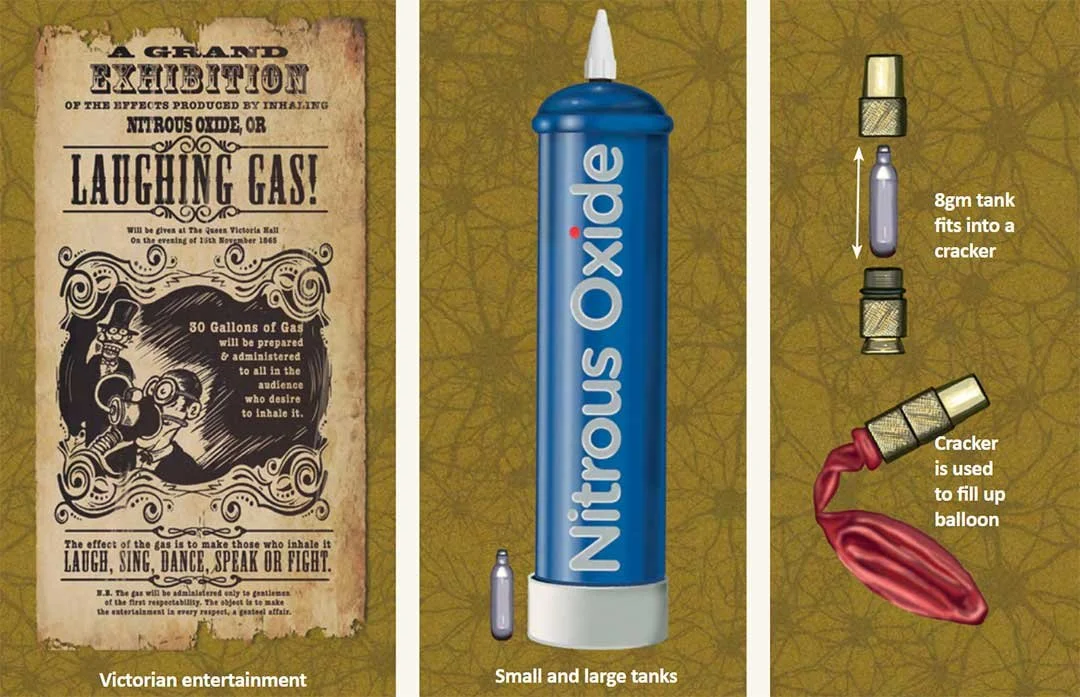
Nitrous oxide is a colourless, non-flammable gas with a faint, slightly sweet smell.
● It is commonly known by the chemical formula N20.
● When used as a street drug, it is often called NOS or Noz.
In the Victorian era, it was nicknamed "laughing gas” as inhaling nitrous oxide was a popular form of amusement and stage entertainment.
Legitimate uses
It is legal to possess nitrous oxide for legitimate medical or industrial reasons, including:
● As a propellant to make whipped cream:
● For boosting the performance of drag racing engines.
When used medically, nitrous oxide is mixed with an equal amount of air and is known as ‘Gas and Air’.
‘Gas and Air’ is inhaled through a mask during dentistry and childbirth, as it reduces pain and anxiety without causing loss of consciousness.
Steel tanks and balloons
Nitrous oxide comes in pressurised steel tanks.
Inhaling the freezing-cold gas directly from a tank can cause serious lung damage, so the gas is filled into a balloon and inhaled from it.
● Small finger-length tanks containing 8 grams of nitrous oxide are known as whippets, chargers, or nangs;
● Small tanks are fitted onto a device called a cracker or a whipped cream dispenser to fill the balloon;
● Large tanks can contain up to 2,000 grams of nitrous oxide - 250 times the amount in an 8g tank.
● Large tanks come with a nozzle for filling balloons.
The law
The emergence of large tanks led to more frequent use of large amounts and an increase in problems.
In 2023, possession of nitrous oxide became an offence if the police think you are going to inhale it to get high.

The effects of nitrous oxide
The effects of occasional use
Inhaling a single balloon of nitrous oxide will produce effects that begin almost immediately:
● Effects peak about 10-30 seconds after you have inhaled and then wear off very quickly.
● Nitrous oxide produces a euphoric, pleasant, joyful, and sometimes psychedelic effect.
● It causes a deep ‘silly’ voice.
People often feel back to normal within about 1 to 5 minutes after the last inhalation, although some report that effects, such as a sense of well-being, can be felt for up to 30 minutes after last use.
Temporary side effects include pins and needles, numbness, weakness in the legs, dizziness and disorientation.
Nitrous oxide is often used alongside other drugs or alcohol, which alters or increases the effects you feel.
Risks of occasional use of nitrous oxide
Most people use nitrous oxide fewer than 10 times a year and fewer than 10 balloons per session. Occasional use is considered fairly low risk compared to other street drugs.
However, even occasional use is not risk-free:
● Accidents: Most commonly, harm is a result of falling over and accidental injury while intoxicated.
● Ice burns: Gas canisters become ice cold as the gas is discharged and may cause ice burns when coming into contact with skin.
● Driving: Although it’s very short-acting, nitrous oxide affects coordination, awareness and driving skills. Driving shortly after or while inhaling has resulted in a number of fatal car crashes.
● Death: There are about 5 deaths a year involving nitrous oxide, usually as a result of deprivation of oxygen (suffocation) when the gas has been inhaled through a gas mask or with a bag over the head.
Regular use of large doses & vitamin B12
Regular use of large doses
Some people regularly use large amounts of nitrous oxide.
● Some people have frequent or sometimes daily binges of 100 or more small 8-gram tanks or use one or more of the larger 2,000-gram tanks in a session.
Vitamin B12
● Vitamin B12 is vital for your health.
● Vitamin B12 helps create red blood cells, maintains nerve cells, and releases energy from the food you eat.
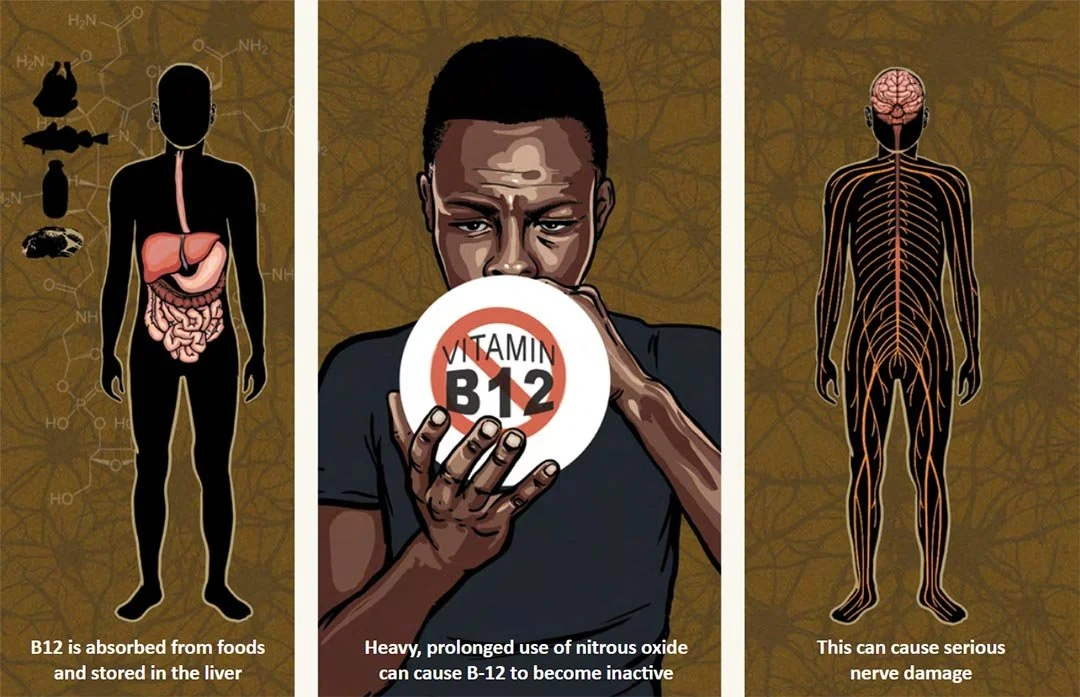
● Your body doesn’t make vitamin B12; it is absorbed through your stomach when you eat animal-based foods (like fish, meat and cheese) and stored in your liver.
Heavy, prolonged use of nitrous oxide can cause your body’s store of vitamin B-12 to become inactive.
This can lead to:
● Extreme tiredness, memory loss, confusion, irritability and depression.
● In some cases, it may cause a temporary psychosis (hearing voices, having delusions, etc.).
Nerve damage
The most serious consequence of inactive vitamin B12 is nerve damage (neuropathy).
● The earliest symptoms of nerve damage are usually tingling or numbness in the hands and legs.
● Damage occurs mainly in the lower limbs and spinal cord and can result in a staggering, uncoordinated walk and lower limb weakness.
● Some people are no longer able to walk.
● In some cases, the symptoms can last for months.
● In some cases, the damage may be permanent.
Hospital treatment involves stopping the use of nitrous oxide and the injection of high doses of vitamin B12 supplements:
● Over-the-counter vitamin B12 supplements will not prevent nitrous oxide-related B12 deficiency. It needs hospital treatment.
Reducing risk

The following advice may reduce the risk for those who do use nitrous oxide.
Accidents: The more nitrous oxide you use, the higher the risk of falls or accidents.
● Sit down before use, don’t hold hot drinks, sharp objects or smoke when using in case of accidents.
Driving: Don’t use nitrous oxide and drive.
● Don’t get into a car with a driver who has or is using nitrous oxide.
Ice burns: Avoid ice burns by not inhaling directly from the tank or by not holding the large tanks between the legs.
● Ice burns may not be noticed due to the anaesthetic (numbing) effect of nitrous oxide.
● Ice burns may seem minor, but can rapidly develop into more serious wounds.
● If you get an ice burn, seek medical attention or ring NHS 111.
Death: Deaths are usually a result of suffocation from inhaling through a mask or with a bag over the head.
● Do not inhale with a bag over your head or with a mask.
● Users will drop a balloon if they pass out, so inhaling from a balloon is by far the safest way to use.
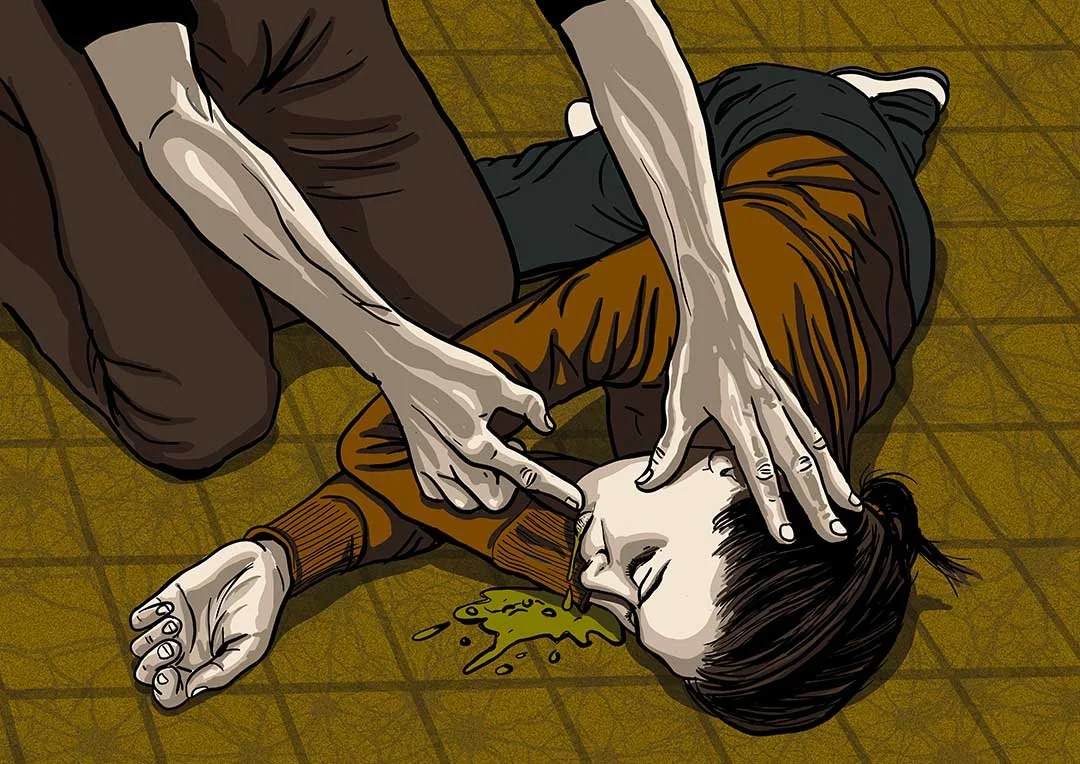
In an emergency: Call 999 and tell the ambulance services what has been taken.
● Place an unconscious person on their side (the recovery position) to prevent them from choking on their vomit.
The law: Possession of nitrous oxide is an offence if the police think you are going to inhale it to get high.
● It is up to you to prove you have a legitimate reason to possess nitrous oxide.
Getting help

Compulsive use of nitrous oxide
● Regular use of high doses of nitrous oxide can become a compulsive, often isolated activity.
● Regular use can affect school or work, cause difficulties with relationships and have a negative impact on emotional health and wellbeing.
● Lack of cash to pay for nitrous oxide can lead to debts and can draw you into crime and risk you being exploited.
● Nitrous oxide and/or other drugs may not be the cause of your problems; you may be using them to try to cope, but drugs often make things worse.
Help for you from Early Break
● It is often the case that a whole series of things have built up or gone wrong in someone’s life by the time they get help.
● It is important to remember that even if you are in a situation that you can’t see a way out of, there is always help available to you.
● At Early Break, you won’t be judged.
● At Early Break, each young person sets their own goals and targets. The role of your individual worker is to support you in achieving these goals.
A downloadable resource is also available.